Nipah virus
New Delhi — Authorities in India's southern Kerala state are racing to contain an outbreak of the Nipah virus. The virus, which is not related to the coronavirus behind the current global pandemic and is far more deadly, killed a 12-year-old boy in Kerala over the weekend, prompting stepped-up efforts to trace his contacts. New infections have been confirmed.
The boy was admitted to a hospital a week ago with a high fever. As his condition worsened and doctors suspected inflammation of his brain (encephalitis), his blood samples were sent to the National Institute of Virology, where tests confirmed a Nipah infection. He died early on Sunday.
Government authorities have stepped up contact tracing efforts, identifying, quarantining, and testing people who may have come into contact with the young victim. According to the state's health minister, Veena George, 188 people who came into contact with the boy had been identified by Monday. Of them, 20 were considered high-risk primary contacts — primarily his family members, all of whom were being held under strict quarantine or hospitalized.
Two healthcare workers who came into contact with the victim were already showing symptoms of Nipah infection by Monday. They were admitted to a hospital and their blood samples were sent for testing.
Authorities sealed off the area within about a two-mile radius of the boy's home, and they were screening people for symptoms in all adjoining districts of Kerala state. The neighboring state of Tamil Nadu was also on high alert for any suspect cases of fever.
This is the second time in three years that a Nipah virus outbreak has been reported in Kerala, which is also reeling under a high rate of COVID-19 infections. The state reports about 68% of India's approximately 40,000 new cases every day.
What is the Nipah virus?
Like the coronavirus, Nipah is a zoonotic virus or one that is transmitted from animals to humans. Transmission generally occurs when humans either come into direct contact with the animals or through the consumption of contaminated food. But a high number of human-to-human transmission cases of Nipah have also been reported.
Fruit bats of the family Pteropodidae — commonly known as the "flying fox" — are the natural carriers of Nipah. They are known to transmit the virus to other animals including pigs, dogs, cats, goats, horses and sheep.
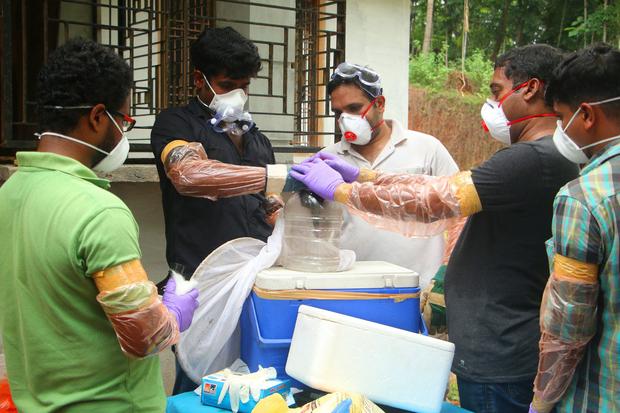
An infected human typically shows symptoms including fever and headache for anywhere between three days and two weeks, followed by a cough, sore throat, and respiratory issues. The condition later progresses swiftly to swelling in the brain cells, leading to drowsiness, confusion, and then possible coma and death.
There is no cure or vaccine for Nipah yet, and patients are only given supportive medical care.
According to the World Health Organization, up to 75% of Nipah infections prove fatal. The mortality rate for the coronavirus, by comparison, is believed to be about 2%. About 20% of survivors experience neurological symptoms that can persist, including seizures and personality changes.
A wider threat?
The Nipah virus was first discovered in Malaysia in 1999 during an outbreak among pig farmers. Since then, there have been multiple outbreaks — all of them in South and Southeast Asia. In all, it is known to have killed more than 260 people.
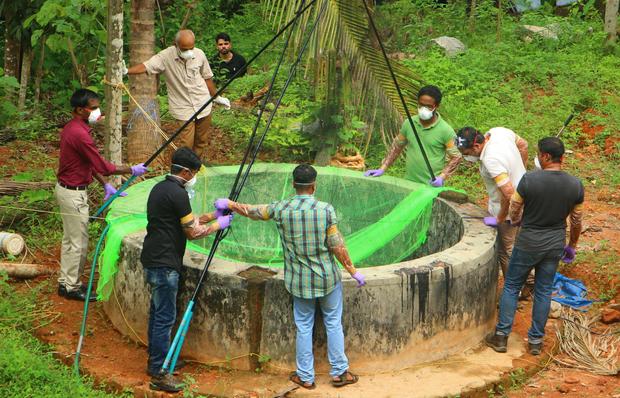
A 2004 Bangladesh outbreak was traced back to humans consuming date palm sap that had been contaminated by infected fruit bats. The last outbreak in India, which hit Kerala in 2018, killed 17 of the 18 people who caught it. Those infections were all traced back to fruit bats found dead in the water of a family's well.
Nipah is considered less contagious than the coronavirus, but it's much higher mortality rate, a longer incubation period of up to 45 days, and its ability to infect a much wider variety of animals all make Nipah a cause of significant concern for epidemiologists trying to predict and prevent the next pandemic.
Veasna Duong, head of virology at the Institut Pasteur research lab in Phnom Penh, Cambodia, has studied human-bat interactions in the region, and he told the BBC earlier this year that the close proximity that people and bats find themselves in at markets and other crowded places across Asia poses a serious risk.

"This kind of exposure might allow the virus to mutate, which might cause a pandemic," Duong told the BBC's Future program, adding that in some circumstances, the virus could even find a host to carry it out of Asia.
"We observe [fruit bats] here and in Thailand, in markets, worship areas, schools, and tourist locations like Angkor Wat – there's a big roost of bats there," he told the BBC's Future program. "In a normal year, Angkor Wat hosts 2.6 million visitors. That's 2.6 million opportunities for Nipah virus to jump from bats to humans annually in just one location."
Scientists warn that as the climate warms and humans destroy the more natural habitats of species like the fruit bats in Asia, opportunities for new zoonotic variants to emerge increase.
The WHO says in its note on the Nipah virus that, "the risk of international transmission via fruits or fruit products (such as raw date palm juice) contaminated with urine or saliva from infected fruit bats can be prevented by washing them thoroughly and peeling them before consumption. Fruit with signs of bat bites should be discarded."